Team

Co-founder and Managing Partner of Buzko Legal. Handles cross-border disputes, international arbitration, and complex transactions at the intersection of law and technology, from shareholder conflicts to sanctions and AI and crypto regulation.

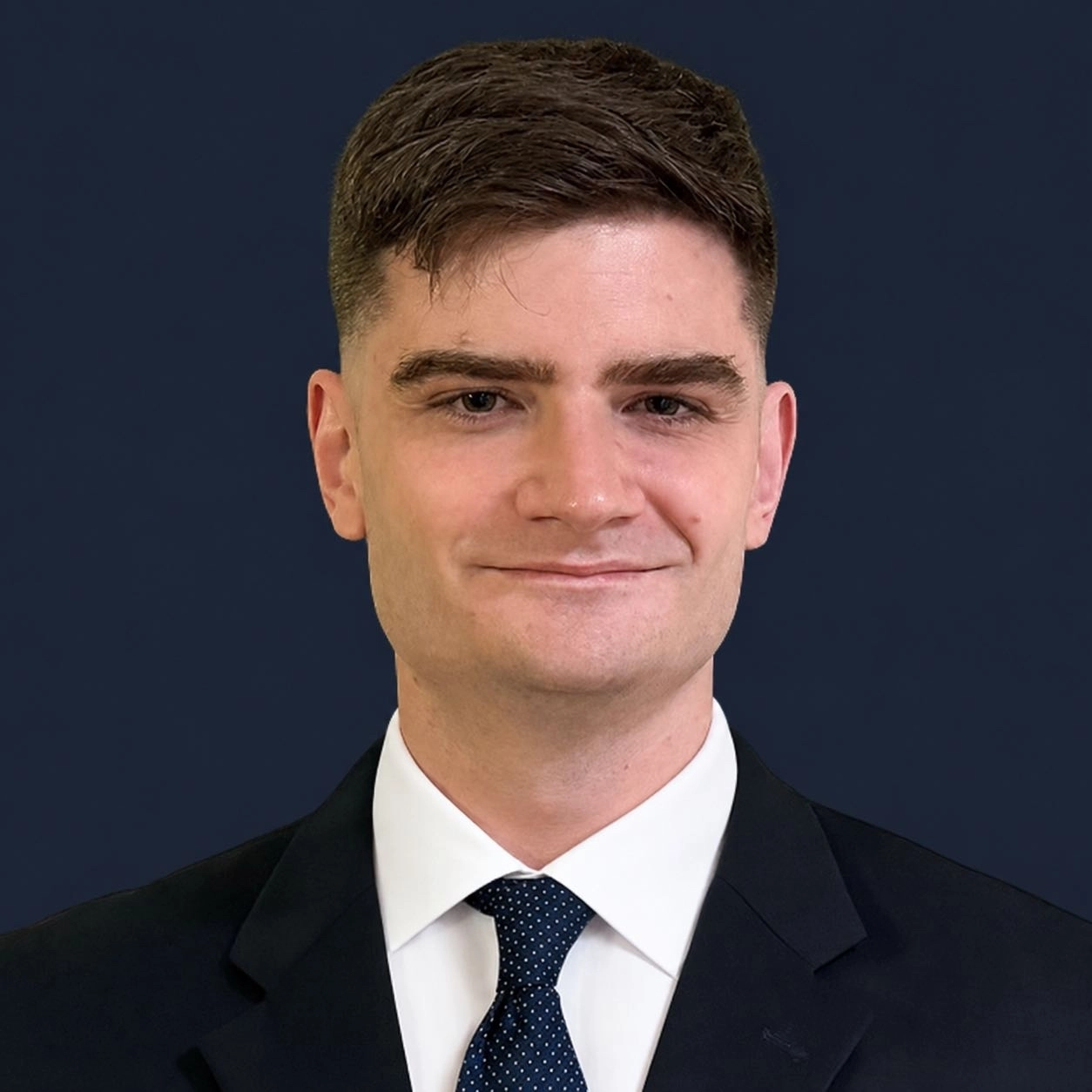

New York-licensed attorney and head of the firm’s Fintech & Crypto practice. He focuses on cross-border crypto startup structuring, investment fund formation, and sanctions compliance.

Head of U.S. Corporate & Transactions. Head of Product & Formations at Skala.io.

At the Forefront of Law and Technology
You Build the Future.
We Handle the Fine Print.

Innovation Brings Conflict.
We Are Ready to Fight for You.
Content
Guide to App Store Disputes for Developers
How to Build a Hedge Fund
Acquihires Explained: How Big Tech Actually Buys Teams
Forward Purchase Agreements for Pre-IPO Shares: What Sellers, Buyers, and Fund Organizers Need to Know
Five Notable Disputes in the Space Industry
Co-Founder Separation: A Practical Guide to Clean Exits
Contacts

.svg)


.svg)
.svg)
Thank you — we’ll get back to you within two business days.
SpaceX sued the Air Force for awarding a sole-source, $11B launch contract to ULA without competitive bidding. The lawsuit helped end ULA’s exclusive hold on national security launches and opened the market to commercial competitors.
San Francisco tried to hold Airbnb liable for providing booking services for unregistered short-term rentals. Airbnb challenged the law under Section 230 of the Communications Decency Act, and the city revised the ordinance during the litigation. The case became an early test of how far platform immunity extends in the sharing economy.
UC Berkeley (Doudna) and the Broad Institute (Zhang) fought over who owned the foundational patents for CRISPR gene-editing in human cells. The USPTO ruled in Broad’s favor, splitting the patent landscape and shaping who controls and profits from the most consequential biotech tool of the century, although a 2025 appellate ruling sent the conception issue back for reconsideration while leaving other parts of the decision intact.
The SEC sued Ripple, claiming XRP was an unregistered security. A 2023 ruling held that programmatic sales of XRP on exchanges were not securities offerings, delivering the first major judicial pushback against the SEC’s “regulation by enforcement” approach to crypto.
The SEC sued the largest U.S. crypto exchange, alleging it operated as an unregistered securities exchange, broker, and clearing agency. The case became a proxy war over whether existing securities law can govern digital assets or whether Congress needs to write new rules entirely.
Users challenged the Treasury Department’s sanctioning of Tornado Cash, an open-source crypto mixing protocol. The Fifth Circuit ruled that immutable smart contracts are not “property” OFAC can sanction, setting a foundational precedent for whether governments can sanction autonomous code under existing sanctions law.
Environmental groups sued the FAA over its approval of SpaceX’s Starship launches from Boca Chica, Texas, citing ecological harm. The case tested whether environmental review frameworks can keep pace with rapid-iteration private aerospace programs, but the court ultimately upheld the FAA’s approval.
The Times sued OpenAI and Microsoft, alleging that training GPT models on its articles constitutes copyright infringement. The highest-profile test of whether large-scale AI training on copyrighted content qualifies as fair use, with existential implications for the generative AI industry.
NYC enacted Local Law 18, requiring short-term rental hosts to register with the city and be present during stays, effectively banning most Airbnb-style listings. Airbnb’s legal challenge failed, and the law took effect, becoming a model for cities seeking to restrict short-term rentals.
Universal Music and other music publishers sued Anthropic, alleging that Claude was trained on copyrighted song lyrics and can reproduce them. A key test of copyright liability for AI model training and output, distinct from the NYT case in that it targets lyric reproduction rather than news content.
Following the $40B collapse of the Terra/Luna ecosystem, the SEC sued Terraform Labs and Do Kwon for securities fraud. A jury found Terraform liable, resulting in a $4.5B settlement, one of the largest enforcement outcomes in crypto history and a warning to algorithmic stablecoin projects.
Authors sued Google for scanning millions of books without permission to build Google Books. After a decade of litigation, courts ruled the project was fair use, legitimizing large-scale digitization and setting the conceptual groundwork for the AI training data debates that followed.
Waymo (Google’s self-driving unit) accused Uber of stealing lidar trade secrets via a former engineer. The case settled mid-trial with Uber paying ~$245M in equity and agreeing not to use the disputed technology, a defining moment for trade secret enforcement in the autonomous vehicle race.
Oracle sued Google for copying Java API declarations into Android. After over a decade, the Supreme Court ruled 6-2 that Google’s use was fair use, preserving interoperability in software development and clarifying the copyright treatment of functional code interfaces.
California’s AB5 law threatened to reclassify gig workers as employees. Uber and other platforms spent over $200M backing Proposition 22, a ballot measure carving out an exemption. Courts upheld Prop 22, preserving independent-contractor status for app-based drivers while creating a hybrid labor model that continues to shape gig economy law.