GPU Futures: How Compute Is Becoming an Exchange-Traded Commodity


CME Group’s New York Mercantile Exchange (NYMEX) is getting ready to list the first futures on AI compute rental prices ever to trade on a regulated U.S. exchange. Each contract covers one month of rental time on a single Nvidia H100 or B200 GPU. Trading was originally set to begin on October 5, 2026, but on September 21, the Commodity Futures Trading Commission (CFTC) extended its review of the contracts until November 9.
November 2026 update. On November 4, CME agreed, at the CFTC’s request, to push the review deadline for the contracts to January 8, 2027. Unless the CFTC issues a notice of non-approval by then, the contracts will be deemed approved. The deadline moves up if another exchange self-certifies, wins approval for, or lists comparable contracts before then.
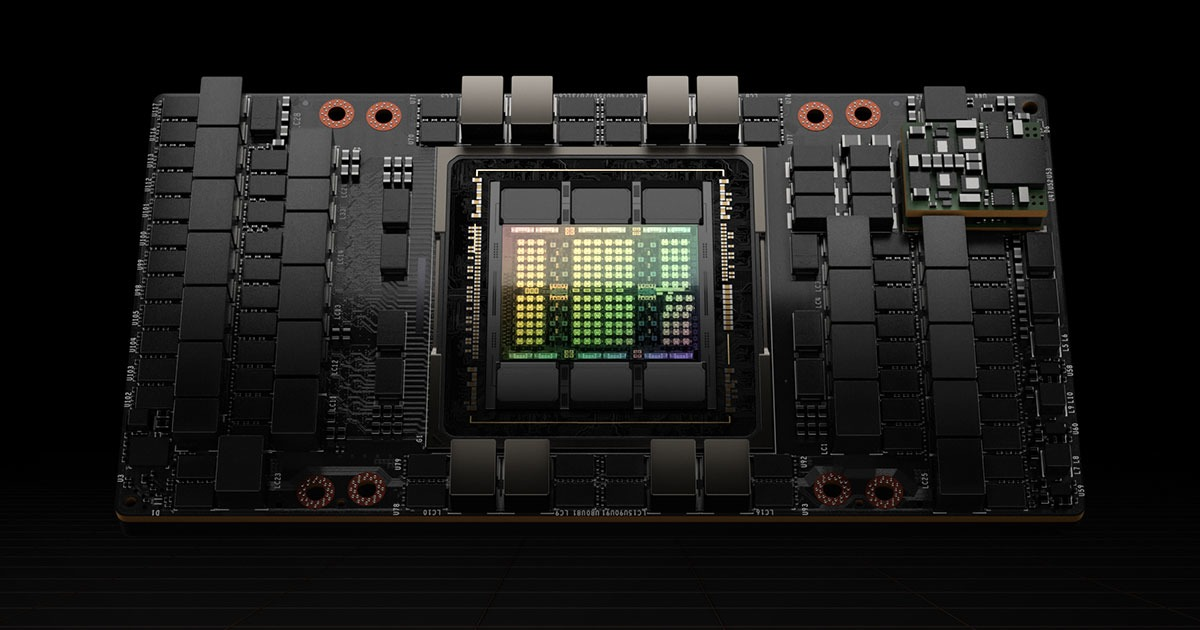
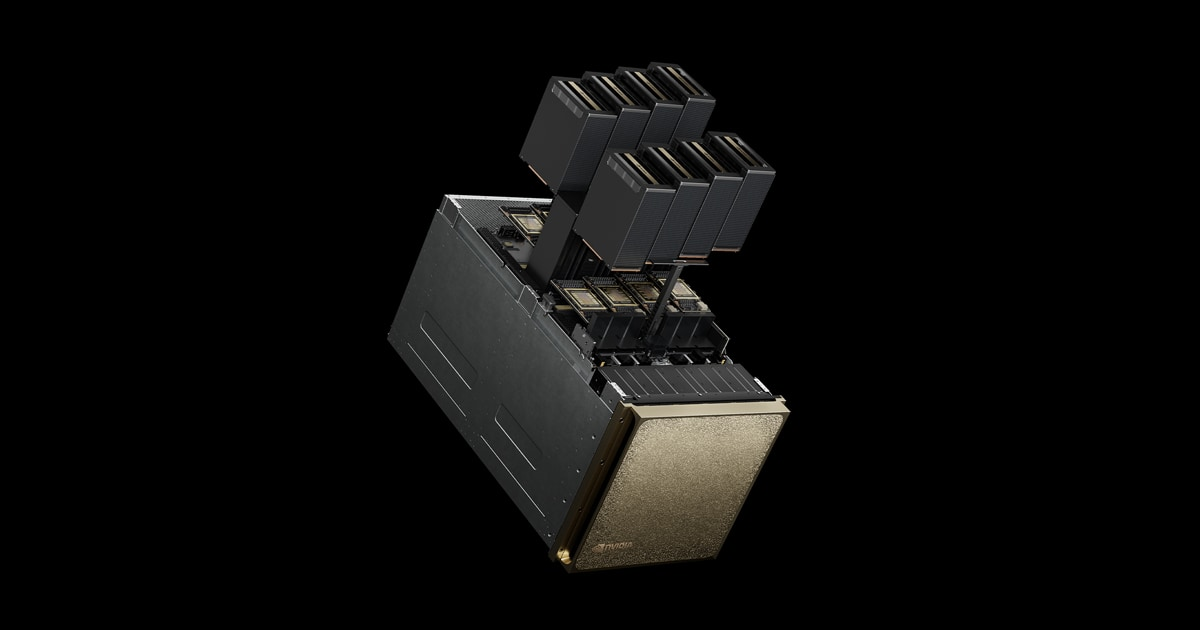
Nvidia H100 (top) and Nvidia B200 (bottom)
CME Group Chairman and CEO Terry Duffy has called compute “the new oil of the 21st century.” The regulator is just as enthusiastic. “America cannot win the AI race without a robust derivatives market for compute,” CFTC Chairman Michael Selig said. Alongside that statement, the CFTC published a request for comment asking how contracts like these fit into U.S. futures law. Comments were due by October 20.
The open comment period is one reason for the delay. CME submitted the contracts for approval on August 11, which started a 45-day review clock. For novel or complex products, CFTC rules let the agency add another 45 days, and it did, citing, in part, the comment process that was still underway. If the CFTC has not objected by November 9, the contracts will be deemed approved, and the review can be extended again only with the exchange’s consent. Even then, that date marks the end of the review, not the start of trading.
This is the third article in our series on neoclouds. The first article covered where neoclouds came from and why, in just a few years, a market with contracts worth hundreds of billions of dollars sprang up out of nowhere. The second article looked at the contracts neoclouds use to sell compute to their customers and found that none of them references a market price. This one looks at how the market’s core product, the GPU-hour, is becoming an exchange-traded commodity.
A Quick Recap of the Market
The compute rental market has at least three types of sellers.
Hyperscalers are the biggest public cloud providers. They are Amazon Web Services (AWS), Microsoft Azure, and Google Cloud, plus Oracle Cloud, which is usually added to the list when it comes to GPUs. Each one runs hundreds of its own data centers, designs its own chips (Google TPU, Amazon Trainium), and sells hundreds of services on top of the hardware, so GPUs are only one product among many. By Epoch AI’s estimate, these companies and Meta, which builds capacity for its own use, controlled about 71% of the world’s AI compute at the end of 2025.
Neoclouds specialize in GPU compute for AI. Companies such as CoreWeave, Nebius, Crusoe, Lambda, Nscale, and Fluidstack buy GPUs by the tens of thousands. They rent out capacity by the hour or under multiyear contracts, usually as bare metal, without the extra services that hyperscalers layer on top.
Compute marketplaces do not own any GPUs and simply match buyers with sellers. Examples include Vast.ai, RunPod, SF Compute, Compute Exchange, and Prime Intellect. Their volumes are small compared with the neoclouds’ multiyear contracts, but they matter here because anyone can see their prices every day.
On the buy side are model developers such as OpenAI and Anthropic, along with corporations, quant funds, startups, and governments.
The GPU-Hour and Four Ways to Buy It
The basic unit in this market is the GPU-hour, which is one GPU (an Nvidia H100, for example) working for a customer for one hour. In practice, GPUs are rented in nodes of eight and in clusters of hundreds of nodes rather than one at a time, but prices are still quoted per GPU-hour. For simplicity we call this “rental,” although, as the second article showed, these deals are more often structured as compute services than as equipment leases.
Tokens add another layer on top of the GPU-hour. A token is the unit of text a language model works with. It can be a word, part of a word, or a punctuation mark. When you send a prompt to ChatGPT, the model first “reads” your text as a sequence of tokens and then “writes” its reply one token at a time.
Model access is priced by the amount of text processed rather than by chip time, at X dollars per million input tokens and Y dollars per million output tokens. OpenAI and Anthropic sell their models this way. So do specialized inference providers such as Fireworks, Together AI, and Baseten, which do not train models of their own but run other developers’ open models on rented GPUs. That means the same GPU-hour can be sold either as an hour of rental or as the tokens the GPU turns out in that hour.
There is no fixed conversion rate between the two. Depending on the provider, a node of eight H100s rents for anywhere from $15 to $100 an hour. One provider can squeeze tens of millions of tokens an hour out of it, while another, running weaker software, gets only a fraction of that. Both layers have their own indexes, and both index providers we discuss below publish prices for GPU-hours as well as tokens. This article focuses on GPU-hours.
As we explained in the second article, there are four commercial ways to buy a GPU-hour, and pricing works differently for each.
| Model | Payment | Commitment | Price |
|---|---|---|---|
| On-demand | Pay as you go | None, but capacity is not guaranteed | List price, the highest |
| Spot (interruptible) | Pay as you go | The provider can reclaim the GPU at any time for a higher-paying customer | A half to a third of the on-demand price |
| Reserved | For all reserved time, used or not | The customer pays for the full term, and the provider holds the capacity | Fixed for 1–36 months, below on-demand rates |
| Committed | Same as reserved, often with 10–50% paid up front | Take-or-pay (the customer pays even for capacity it does not use) | Negotiated, the lowest per hour |
In market terms, both of the first two models are spot purchases (not to be confused with spot, or interruptible, capacity). The deal happens here and now, at today’s price. The customer spins up a GPU, uses it for an hour, and pays whatever that hour cost. Tomorrow the price may be different.
Reserved and committed contracts work differently. Economically, it is like signing a one-year lease on an apartment instead of paying for a hotel room night by night. The customer books a set number of GPUs for a set period and pays for all of it, no matter how many hours it actually uses. In return, it gets guaranteed capacity and a price below list.
The big deals, such as Microsoft’s with CoreWeave, Meta’s with Nebius, and Anthropic’s with Lambda, are committed contracts covering tens of thousands of GPUs. Prices are either fixed for the whole term or adjusted under an agreed formula, but as we saw in the previous article, none of the disclosed contracts pegs the price to a market index.
Like most commercial contracts, all of these deals share a weak spot. The other side could default or go insolvent. The neocloud is counting on the customer to pay for the full term, and the customer is counting on the neocloud to keep the cluster running the whole time. No one knows whether either of them will be bankrupt a year from now, and if one is, the other becomes just another creditor waiting in line. Carmen Li, founder of Silicon Data, calls this credit risk, baked into every contract, the biggest problem the compute market faces right now. Later on, we show how an exchange decouples price protection from that risk.
One Chip, a Dozen Prices
Take one hour on an Nvidia H100, the workhorse chip of the AI boom, on October 5, 2026, the day the CME futures were originally supposed to start trading. The hyperscalers are the most expensive. Azure charges $12.29, Google Cloud $11.06, and AWS $6.88. These per-GPU figures are our own calculations. All three sell their flagship H100 setups as eight-GPU nodes, so we divided the node price (for Azure, $98.32 an hour) by eight.
Neoclouds are cheaper. CoreWeave lists the H100 at $6.16, Lambda at $3.99, and Nebius at $4.50. These are sticker prices too, the starting point for negotiations.
The indexes we cover below are lower still. Silicon Data’s neocloud index stands at $2.81, and Ornn’s index of executed trades is at $2.52. The gap between a neocloud’s list price and the index is exactly the discount you will not find in public sources.
Marketplaces are the cheapest of all. On Vast.ai, private owners rent out the same GPUs for around $1.80 an hour, and the price moves throughout the day, much as it would on an exchange.
From top to bottom, that is nearly a sevenfold spread for the very same chip.
The same H100 rents for anywhere from $1.79 to $12.29 an hour
What it cost to rent one Nvidia H100 GPU for an hour on October 5, 2026. Hyperscaler prices are the eight-GPU node price divided by eight. Index data from Silicon Data and Ornn.
| Provider or index | Segment | What it measures | $ per GPU-hour |
|---|---|---|---|
| Microsoft Azure | Hyperscalers | ND96isr H100 v5 node, $98.32 for 8 GPUs | 12,29 |
| Google Cloud | Hyperscalers | a3-highgpu-8g node, $88.49 for 8 GPUs | 11,06 |
| Silicon Data index | Hyperscalers | hyperscalers, on-demand | 7,16 |
| AWS | Hyperscalers | p5.48xlarge node, $55.04 for 8 GPUs | 6,88 |
| CoreWeave | Neoclouds | List price | 6,16 |
| Nebius | Neoclouds | List price | 4,50 |
| Lambda | Neoclouds | List price | 3,99 |
| Crusoe | Neoclouds | List price | 3,90 |
| Silicon Data index (SDH100RT) | Neoclouds | neoclouds, on-demand | 2,81 |
| Ornn index (OCPI) | Neoclouds | executed trades, on-demand | 2,52 |
| Vast.ai | Marketplaces | Privately owned GPUs | 1,79 |
Figure 1. Hourly price of renting an Nvidia H100, October 5, 2026
Some of the gap is easy to explain. Azure’s price includes services and guarantees, for example, while on Vast.ai you are renting someone else’s GPU with no guarantees at all. But most of the gap reflects opacity, not quality.
No large customer actually pays a hyperscaler’s list price. Pricing in big deals is confidential. Even the contracts filed on EDGAR have the prices redacted, so only the parties know the real terms. Simeon Bochev, a co-founder of the Compute Exchange marketplace, has described a startup that took the advice of a trusted adviser and bought capacity from the adviser’s own company at 30–40% above market. Without a public benchmark, an overpayment like that is impossible to spot.
Why Is Compute So Hard to Price?
Every exchange-traded commodity starts with a standard. For oil, that means density and sulfur content. For wheat, it is the grade, and for copper, purity. Within a given standard there is little left to tell one barrel or bushel from another, so a single number can fairly describe the whole market.
A GPU-hour varies along a dozen or so dimensions, and every one of them affects the price. They include chip generation and model, memory, form factor (an SXM version costs more than a PCIe version of the same chip), interconnect speed, cluster size, contract length, provider type, location, and service level.
On top of that, a GPU-hour has two quirks that no traditional commodity shares:
- It cannot be stored. An unused hour is gone forever, like an empty seat on a plane. You cannot buy hours cheaply today, warehouse them, and sell them a year later.
- Chips go obsolete. Nvidia ships a new generation every 12–18 months (the A100, H100, H200, B200, and B300, with Vera Rubin arriving in 2026), and each new generation pushes the previous one down the price ladder. A three-year H100 contract will outlast two of them.
All this makes prices volatile. At the height of the 2023–2024 shortage, an H100 cost $7–10 an hour. By 2025, supply had caught up with demand. AWS cut prices on its H100 instances by 44% in a single announcement, and according to Silicon Data, neocloud H100 rates fell 45% between September 2024 and February 2025. In 2026, prices reversed course. According to the SemiAnalysis index, one-year H100 rates climbed from $1.70 in October 2025 to $2.35 in March 2026, up almost 40%, as inference and agentic workloads soaked up capacity faster than new data centers could come online. Neocloud list prices are going up too. On October 1, 2026, Nebius raised its on-demand prices for the second time in three months, lifting the H100 by about 17%.
The Index, or How Thousands of Prices Become One Number
So how do you boil a product with a dozen dimensions down to one number? The industry has settled on three techniques, all borrowed from commodity benchmarks:
- One index per chip, not one for all compute. The H100, B200, and A100 each get their own index. Oil works the same way, with Brent and WTI as separate grades and separate contracts. In theory, you could create a “unit of compute” by converting every chip based on performance, but hedging a contract price requires protection for a specific chip, not an abstraction. That is why there is no single AI compute index, and there probably never will be.
- Normalizing to a benchmark. Each data point is adjusted to a “reference H100-hour” to account for form factor, term, cluster size, network type, real-world performance, and location, and outliers are then removed. This mirrors quality differentials in oil, where a premium or discount to the benchmark grade reflects density and sulfur content. GPUs simply have more variables.
- Segmentation. Neocloud and hyperscaler indexes are published separately, so the gap between them stays visible rather than being averaged away. Without that split, a market-wide average would describe a buyer who does not exist, one paying both $7 and $2.80 per GPU-hour.
Who Runs the Indexes: Silicon Data vs. Ornn
The key indexes behind the exchange contracts come from two companies, Silicon Data and Ornn.
Carmen Li, who previously ran data partnerships at Bloomberg, founded Silicon Data in 2024. In August 2026, the company raised $30.5 million in a round led by Valor Atreides AI Fund, with trading firms DRW and Jump and CME Group itself among the investors. Silicon Data has published its SDH100RT index since May 2025. The index draws on a wide range of data, including list prices, marketplace prices, brokered cluster sales, and private deals (about 150,000 records a day from 50–100 platforms). Separate indexes track neoclouds and hyperscalers, and the family covers the H100, H200, A100, B200, B300, and AMD MI300X. Silicon Data’s exchange partner, naturally, is CME.
Ornn was founded by MIT graduates Kush Bavaria and Wayne Nelms and in June 2026 raised $33 million from a16z crypto and Galaxy. It has published its OCPI index since October 2025, and its approach is fundamentally different. The index uses only executed on-demand rental trades, which Ornn collects from a network of providers worldwide. Ornn’s exchange partner is Intercontinental Exchange (ICE), which in May 2026 announced its own suite of futures on the H100, H200, B200, and RTX 5090. The H100 and B200 contracts are first in line, but ICE has yet to set a listing date and is waiting for the CFTC’s comment process to wrap up.
Ornn is not ICE’s only partner. In July 2026, the exchange also announced futures on NATIVX’s COIL index, which expresses compute prices per unit of energy consumed. In September, Nodal Exchange, home to most of the open interest in North American power futures, unveiled compute futures of its own with index provider Compute Desk.
| Silicon Data (SDH100RT) | Ornn (OCPI) | |
|---|---|---|
| Data | List prices, marketplaces, brokered and private deals, normalized to a benchmark | Executed trades only |
| Coverage | 50–100 platforms in 40–50 countries, separate series for neoclouds and hyperscalers | H100 SXM, on-demand, providers worldwide |
| H100 value on October 5, 2026 | $2.81 (neoclouds), $7.16 (hyperscalers) | $2.52 |
| Distribution | Bloomberg, LSEG, web portal | Bloomberg, web portal |
| Exchange | CME (NYMEX), CFTC review extended to November 9, 2026 | ICE, no date yet |
If Every Contract Has a Price, Why Does the Market Need One?
A contract price and a market price are not the same thing. The contract price tells you what you agreed to pay. It does not tell you what the same capacity is worth on the market today or will be worth a year from now, or whether you got a good deal. A thousand private prices in a thousand private contracts are not a market price. They are noise, and the market price still has to be pulled out of it.
The closest analogy is currency exchange. Every exchange booth posts its own rate, yet there is also an official central bank rate, a single figure derived from many transactions. Plenty of contracts simply say “payable at the exchange rate on the payment date.” A compute index does the same job.
Who Needs an Index?
The contracting parties. A neocloud quotes $2.50 an hour. Is that a good deal or not? Without a benchmark there is no way to know, and the advantage goes to whoever has seen more deals or has exclusive access to a large sample of them. An index levels the playing field. It also gives the parties a reference point for a pricing formula. Instead of “a fixed $2.50 for two years,” the contract can say “index minus 10%,” and the price will track the market.
Neocloud lenders. A bank that has financed a neocloud’s launch wants to know how much the GPUs its money paid for will earn. Rental income from those GPUs is, after all, the main cash flow behind the loan. We touch on this below and cover it in more detail in the next article in the series.
Public market investors, auditors, and tax authorities. Roughly speaking, CoreWeave’s market value is its fleet times the market rental rate. Impairment testing, collateral valuation, and transfer pricing also require an independent price, not one the company picked itself.
Courts. Damages for non-delivery equal the difference between the contract price and the market price. Before 2025, a plaintiff whose compute supplier failed to deliver had no way to prove what a GPU-hour was worth on the market.
How GPU-Hour Futures Work
A futures contract is a standardized, exchange-traded agreement to buy or sell a commodity in a given future month at a price set today. Here the index is not the commodity but the yardstick. At the end of the month, the exchange takes the average value of the index and uses it to calculate what each side owes the other. So “GPU-hour futures” really means futures on a GPU-hour price index.
CME has already filed the contract specs with the CFTC. The products are Silicon Data H100 Rental Index Futures and Silicon Data B200 Rental Index Futures, under the codes GPU1 and GPU2. One contract covers 730 GPU-hours, or one chip for one month. Prices are quoted in dollars per GPU-hour, with a minimum tick of one cent, or $7.30 per contract. The exchange lists 36 consecutive monthly contracts, which gives a three-year forward curve. Settlement is cash only, based on the arithmetic average of Silicon Data’s daily U.S. neocloud on-demand index over every business day in the contract month.
A Hypothetical Example
Texas Compute is a neocloud with 2,000 H100s, bought with debt at 10%. Most of its capacity goes out on short contracts, so its revenue rises and falls with the market from month to month. When it came time to refinance, the bank offered a deal. If Texas Compute can show that its 2027 revenue will not fall below $2.30 an hour, the rate drops to 8%.
Nova Labs is a startup planning a month-long run on 100 H100s in March 2027, with a budget of $2.50 an hour. If the market price climbs to $3.50, the numbers no longer work.
Neither company trades on the exchange directly, so each goes through a clearing broker, known as a futures commission merchant. Each signs a futures account agreement with its broker and funds the account. The futures contract itself is not a negotiated two-party document. It is a set of standard terms in the NYMEX rulebook that apply to everyone.
On the first day of trading, Texas Compute posts an order to sell 100 March 2027 GPU1 contracts at $2.50. The same day, Nova Labs posts an order to buy 100 contracts at $2.50. The trading system matches them anonymously. Then comes novation, and the CME clearinghouse steps in between the two. Each side now faces the clearinghouse, not the other. If the startup goes under, the neocloud still gets paid. Any loss is absorbed first by the startup’s margin, then by its broker, and as a last resort by the clearinghouse’s guarantee fund.
Economically, the neocloud has promised to sell 73,000 GPU-hours in March at $2.50, and the startup has promised to buy them. The position is worth $182,500. Each side puts up initial margin, collateral of roughly 10–20% of that amount, at a level the exchange sets.
From then on, every evening the exchange sets a settlement price for the March contract based on the day’s trades and moves money between the accounts accordingly.
A month later, Nvidia unveils its next generation of chips, expectations for the H100 drop, and the March contract falls to $2.20. The neocloud’s account gains $21,900, and the startup’s account loses the same amount.
A month after that, inference demand spikes and the contract climbs to $2.80. Now the neocloud is down the same $21,900, and its broker wants the account topped up. That is a margin call. If the cash is not there, the broker can liquidate the position, and the hedge is gone. Daily settlement does not change the final result, but it does change when the money moves. For a hedger carrying expensive debt and no cash cushion, that is a real problem.
Throughout March 2027, Silicon Data publishes the index every business day. Say the monthly average comes in at $2.00, and on March 31 the position settles at that price. Here is how it plays out.
| When | March contract price | Texas Compute account (seller) | Nova Labs account (buyer) |
|---|---|---|---|
| First trading day, trade executed | $2.50 | 0 | 0 |
| One month later, Nvidia unveils a new chip generation | $2.20 | +$21,900 | –$21,900 |
| Two months later, inference demand spikes | $2.80 | –$21,900, margin call |
+$21,900 |
| March 31, 2027, settlement at the monthly index average | $2.00 | +$36,500 | –$36,500 |
Each row shows the running total, measured from the $2.50 trade price rather than from the previous day.
Now for the part that matters most. What was happening in the real world all this time?
In March, Texas Compute rented out its 100 hedged GPUs at the market rate of $2.00 (assumed, for simplicity, to equal the index) and took in $146,000. Add the $36,500 from the exchange, and the total is $182,500, or exactly $2.50 an hour.
Nova Labs rented 100 GPUs from a neocloud at $2.00, paying the same $146,000, and lost $36,500 on its futures. Its total cost was $182,500, again $2.50 an hour.
Had the index settled at $3.00, everything would have run in reverse, and both companies would still have landed at $2.50 (see the table). Neither side won or lost in business terms. Both bought certainty.
| Index at $2.00 | Index at $3.00 | |
|---|---|---|
| Texas Compute | ||
| Rental revenue, 100 GPUs at market | $146,000 | $219,000 |
| Futures gain (+) or loss (–) | +$36,500 | –$36,500 |
| Total revenue for 73,000 hours | $182,500 ($2.50 an hour) |
$182,500 ($2.50 an hour) |
| Nova Labs | ||
| Rental cost, 100 GPUs at market | –$146,000 | –$219,000 |
| Futures gain (+) or loss (–) | –$36,500 | +$36,500 |
| Total cost for 73,000 hours | $182,500 ($2.50 an hour) |
$182,500 ($2.50 an hour) |
Three caveats. First, in real life the other side of the trade is more likely to be a market maker such as DRW or Jump (both investors in Silicon Data) than a startup. A hedger does not need to find someone with the mirror-image need. Second, there is no obligation to hold a contract until settlement. A position can be closed out any day with an offsetting trade. Third, to meet the bank’s condition, Texas Compute would sell contracts for every month of 2027 and for the entire spot portion of its fleet, but the mechanics would be the same.
Why Cash Instead of GPUs
Notice that in this example, not a single GPU changed hands in March. Texas Compute rented its GPUs to real customers, Nova Labs rented from a real provider, and the exchange simply moved money between accounts. That makes this a cash-settled contract. A physically settled contract, like NYMEX’s own WTI crude oil futures, requires the seller to actually deliver the commodity. Every GPU contract announced so far is cash-settled. Physical delivery would force the exchange to define a standard delivery unit in its rulebook (which node, which network, how access is handed over, what counts as downtime), and each of those points would become a source of disputes.
Cash settlement sidesteps all of that. The exchange only has to calculate the index average honestly. The trade-off is basis risk, which we come back to in the next section.
What You Can and Cannot Hedge
Not every risk can or should be hedged. A hedge is an exchange position that offsets a risk you already have. Without that underlying risk, a hedge is just a bet on price. Take the same 100 H100s from Texas Compute’s fleet and run them through four scenarios.
1. All 100 GPUs on a Two-Year Fixed Contract at $2.00
There is no price risk on revenue here, because the customer pays $2.00 no matter where the index goes. The neocloud has no reason to sell futures. Here is what happens if it sells 100 contracts anyway, say at $2.00.
If the index settles at $1.20, the neocloud collects $146,000 under the contract plus $58,400 on the futures, making money on the decline. If the index settles at $3.00, it collects the same $146,000 but pays out $73,000 on the futures, giving up half its revenue. The futures offset nothing, because there was nothing to offset.
It is a classic mistake, and one reason banks write both a floor and a ceiling on hedging volumes into their loan agreements.
2. Contract Pegged to the Index (“Index Minus 20%”)
Now revenue floats, and futures make sense. But the right number is 80 contracts, not 100. The customer contract passes through 80% of any move in the index, so that is the share to offset.
The hedge ratio equals the multiplier in the pricing formula. As long as the customer contract references the same index as the futures, the hedge is exact by design, because revenue and futures move off the same number.
3. Fifty GPUs Rented, Fifty Sitting Idle
Idle GPUs can and should be hedged. The risk is real. Sooner or later these GPUs will be rented out, but at whatever the market pays at the time, and if the market drops, revenue drops with it. This is an anticipatory hedge, the same tool an oil producer uses for oil still in the ground or a farmer for a crop still in the field.
The only question is how much. One contract is 730 GPU-hours, or one GPU running around the clock for a month. But a GPU offered on the spot market might sell, say, 80% of its hours, since there are gaps between customers and some time goes to maintenance.
So the neocloud should hedge the hours those 50 GPUs will actually sell, not the GPUs themselves. That is 50 × 730 × 0.8 = 29,200 hours, or 40 contracts. At an expected 60% utilization, the right number is 30.
When in doubt, round down. Every extra contract is a futures sale with no revenue behind it, and if the market rises, the neocloud will have to pay for it out of its own pocket.
If a customer signs up for these GPUs at a fixed price, the risk goes away, and the matching futures should be bought back the same day. Otherwise, the neocloud is speculating again.
4. Five-Year Bank Loan, Two-Year Rental Contract
The contract locks in revenue for the first 24 months. After that, it is up to the market. The neocloud can sell futures for months 25 through 36, but at whatever the forward curve says for those months, not at, say, $2.00. Past month 36, there is no exchange-traded hedge yet.
| Scenario | Price risk | Contracts to sell | Why |
|---|---|---|---|
| Two-year fixed contract for all 100 GPUs | No | 0 | Revenue is already locked in, so futures would add risk instead of removing it |
| “Index minus 20%” contract | Yes, 80% of index moves | 80 | The hedge ratio equals the multiplier in the pricing formula |
| 50 GPUs rented at a fixed price, 50 idle | Yes, on 50 GPUs | About 40 | Hedge the expected hours (50 GPUs × 730 hours × 80% utilization), rounding down |
| Five-year loan, two-year contract | Yes, from month 25 | For months 25 through 36, at forward curve prices | No exchange-traded hedge exists past month 36 |
What None of These Hedges Covers
Basis risk. The contracts settle on the U.S. on-demand H100 index, but your cluster might be in Finland, have a premium interconnect, and be rented out on a three-year contract. The hedge covers the broad market move, not the gap between you and the benchmark.
Obsolescence. Contracts run 36 months out, and in three years the H100 will be several generations behind the latest chips.
Cash flow timing. Futures sold for 2029 are marked to market from day one. If prices rise in 2027, the neocloud pays out on them now, while the offsetting revenue does not show up until 2029.
Volume. Futures hedge the price of an hour, not the number of hours sold. If the GPUs sell fewer hours than were hedged, the excess turns into a bet on falling prices. That is why anticipatory hedges are adjusted whenever the utilization forecast changes.
Why Banks Care About Futures
CME’s press releases pitch the contracts to traders, financial institutions, AI builders, and cloud service providers. But on the Energy Gang podcast, Peter Keavey, head of CME’s energy business, singled out banks as the key audience. As he explained, the first thing a bank looks at when it lends to an oil producer is the forward curve. To see why that matters for GPUs, it helps to start with oil.
How Oil Producers Turn Hedges into Borrowing Power
U.S. banks have financed oil and gas producers through reserve-based lending for decades. The bank takes an engineering report on the reserves and values future barrels not at the futures price but at its own conservative forecast, known as a price deck, which typically sits 10–20% below the market. That collateral value sets the size of the loan. When oil fell from $90 to $40 in 2014–2015, banks marked down their collateral and demanded early repayment, and over the next two years more than 100 U.S. oil producers went bankrupt.
The formula has one lever the borrower controls. For barrels covered by futures or swaps, the bank uses the hedge price instead of its own cautious forecast, because the clearinghouse stands behind that price. Say a company produces 10,000 barrels a day and its bank’s price deck is $62. If it sells futures on 6,000 barrels at $74, the value of its collateral goes up by more than 10%, even though the asset itself has not changed. That is why hedging in a typical oil producer’s loan agreement is a covenant, not a choice. The borrower must keep at least 50–75% of production hedged two to three years out, but no more than 85–100%, so the hedge does not turn into speculation.
Hedging cuts both ways, though. In 2022, when oil topped $100, hedged shale producers handed their counterparties more than $10 billion, according to Rystad Energy. Shareholders complained, but the loans stayed current. A hedge is not there to make money. It is there to make cash flow bankable.
How This Applies to GPUs
The parallel is closer than it looks. A shale well produces most of its oil in its first year or two, after which output falls 60–70%. A GPU follows the same arc. It earns its highest rates in its first year or two and then gives way to the next generation. The reserve report becomes a report on the GPU fleet and the contracts signed against it. CoreWeave’s loans backed by GPUs and contracted revenue are reserve-based lending in all but name.
What GPUs lacked was that lever, a bank-recognized way to lock in future rental prices. While a GPU is under contract, the bank uses the contract rate. After the contract ends, or for GPUs on the spot market, it plugs in a conservative rate forecast at a discount to the market, effectively its own price deck. But any forecast needs an anchor, and until the indexes came along, the GPU-hour had no public price. So banks lent mostly against signed contracts and heavily discounted uncontracted GPUs when valuing collateral.
Futures will let a neocloud hedge the spot portion of its fleet three years out and make the same case to its bank that an oil producer does. That is exactly the deal in our example. Texas Compute shows hedged revenue of at least $2.30 an hour, and its rate drops from 10% to 8%.
An eight-GPU H100 node costs about $400,000. Each percentage point of interest on that amount comes to $4,000 a year, or roughly 8 cents per GPU-hour at 70% utilization. The two points in our example are worth about 16 cents, or roughly 6% of the index price. By comparison, the yield gap between CoreWeave’s bonds and the hyperscalers’, which we covered in the first article, was about 4–5 points, or $0.30–0.40 on every GPU-hour.
Power companies have an indirect stake. For a generator whose investment case depends on data centers, the forward curve signals whether anyone will want its megawatts three years from now, and it can hedge gas, power, and GPUs as one package. Electricity is not the largest cost in a GPU-hour, but it is volatile, and its share will grow. Once a GPU has paid for itself, power costs drive more and more of the hourly price.
What the Index Means for Neocloud Contracts
The index changes not just financing but the compute contract itself. Fixed prices will probably stick around, since short-term deals and deals with cautious counterparties will keep using a set number.
But the longer the contract, the stronger the pull toward a formula, and other markets settled on the standard formulas long ago. A contract can be priced at “index minus 10%,” use a collar of “the index, but no less than $1.60 and no more than $2.60,” or carry a fixed price that resets to the index once a year. Another option is a hybrid, with 70% of the volume at a fixed price and 30% at the index. The reason is simple. When prices are volatile, a fixed number locked in for years is a losing bet for one side, and sooner or later that side starts looking for a way out of the deal.
Futures turn the compute contract and price risk management into two separate decisions. Until now, the only way to lock in a price was to agree on a fixed number with the other side. Now the contract price can float, and each party decides on its own whether to lock in a price on the exchange, with no exposure to the other side’s credit risk.
A fixed price used to hold up because the provider worried about prices falling and the customer worried about prices rising. If both expected the same thing, one of them would refuse to lock in. Now the parties no longer need opposite fears to sign a deal. The provider can expect prices to rise and skip hedging altogether, while the customer buys futures on its entire volume without asking the provider.
For lawyers drafting these contracts, that raises a new set of questions:
- which index to use (provider, ticker, neocloud or hyperscaler series, publication time);
- how the value for each period is calculated;
- what happens if the index is discontinued or its methodology changes (Silicon Data already revised its methodology in December 2025);
- who bears basis risk if the customer’s cluster differs from the index’s reference specification;
- and how calculation disputes are resolved, and by whom.
There are no standard forms yet, so the first contracts will be built by hand, borrowing from commodity and energy market practice. We will come back to these questions in a separate article.
What Could Go Wrong
A market trying to cover in three years what took oil several decades is bound to stumble somewhere. These are the most likely trouble spots:
- Liquidity. The new contract may stay thinly traded. Large hedges will go through over-the-counter swaps, and fragmentation by GPU, region, and network type will split exchange volume into smaller submarkets.
- No way to store it. In oil, futures stay linked to spot prices because traders can buy the physical commodity and store it. With AI compute, the forward curve rests on expectations alone. Two recent academic papers (Bandi and Su, Assodi) show that standard futures pricing models do not carry over directly.
- Obsolescence. Who wants to be long H100s for 2029 with Vera Rubin about to ship? For a commodity that gets cheaper with every generation, longer-dated contracts should trade below near-term ones, and a long 2029 position risks going underwater with each new Nvidia announcement. That said, when Silicon Data launched its forward curve in April 2026, it noted that long-term contracts trade at almost no discount to on-demand and sometimes even at a premium. For now, the market is betting more on scarcity than on falling prices.
- Manipulation. Some index inputs are list prices that providers set themselves, and a handful of platforms account for a large share of trades. The CFTC’s request for comment asks point-blank whether a provider could move the index by changing its posted rate or steering capacity to a source platform during the observation window. It also asks whether a contract should be allowed at all if it settles on data the CFTC cannot verify. This is the request for comment the CFTC cited when it extended its review of the CME contracts. There is precedent, from the LIBOR scandal to the European Commission’s 2013 inspections at oil companies and Platts over suspected price distortion. Then there is the independence of the index administrators themselves. Since October 2025, Carmen Li has run both Silicon Data and the Compute Exchange marketplace. Compute Exchange co-founder Don Wilson founded the trading firm DRW and was involved with Silicon Data from the start, and CME is now a Silicon Data shareholder as well. Ornn operates its own trading platform. None of this is an accusation, but it does raise a benchmark governance question. The IOSCO principles for financial benchmarks put governance first and devote a separate principle to administrator conflicts of interest.
- Hyperscalers on the sidelines. At the end of 2025, the hyperscalers and Meta controlled about 71% of the world’s AI compute, which they either use themselves or sell under confidential contracts. The index sees their list prices but not their actual deals. The hyperscalers may stay out of this market entirely, or show up with surplus capacity once their new campuses are finished.
- Two indexes, two prices. Even in a calm market, Silicon Data and Ornn diverge noticeably and can swap places. In mid-September 2026, Silicon Data was 14 cents below Ornn. By October 5, it was 29 cents above (Silicon Data at $2.81, Ornn at $2.52). By October 9, the gap had shrunk to 6 cents (Silicon Data at $2.85, Ornn at $2.79). Researchers at HEC Montréal found that weekly changes in the two H100 indexes have a correlation of just 0.17, so one is a poor hedge for the other. In a stressed market the gap will widen, and a hedge on one exchange against a contract pegged to the other index will be imprecise.
What Comes Next
Carmen Li has called this market a “giant baby.” Everyone knows it will grow up, but it has to do its growing at the breakneck pace set by the AI investment cycle.
Whether the market settles on a single benchmark, the way oil did with Brent, or fragments by chip, region, and platform remains to be seen. But most of the distance has already been covered. In three years, compute has gone from a line item on a cloud bill to a commodity with its own public price and index. The exchanges have their contracts ready and are waiting on the regulator. Once trading starts, it will be the lawyers’ turn to write this index into compute contracts and loan agreements.
Contacts


